
The Attention We Practice Becomes the Brain We Build
May 20, 2026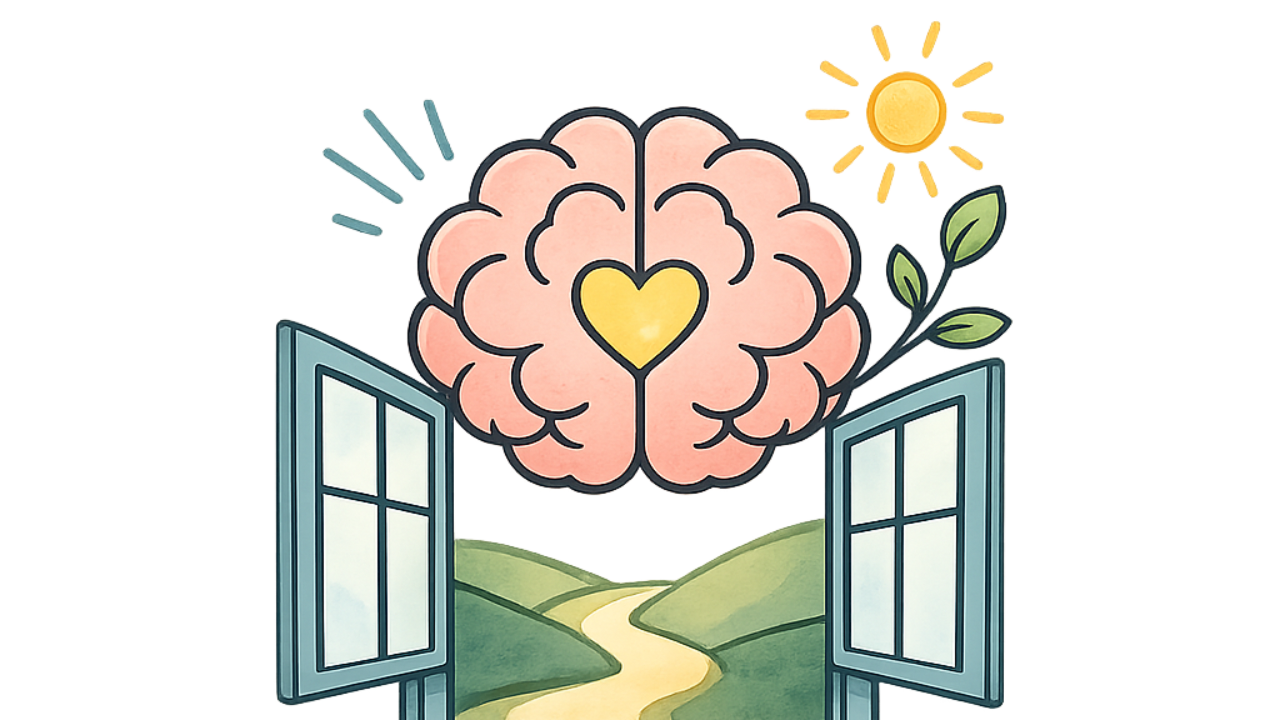
Recently, I finished Widen the Window by Elizabeth A. Stanley. One of the sentences I highlighted and keep coming back to is this:
“One of the key practical lessons of modern neuroscience is that the power to direct our attention has within it the power to shape our brain’s firing patterns, as well as the power to shape the architecture of the brain itself.”
There are certain sentences in books that stop me cold — not because they are complicated, but because they explain something I have been living without having the language for it.
Don’t get me wrong, I KNOW that what we think about we bring about. HOWEVER, “the power to direct our attention has within it the power to shape our brain’s firing patterns….” was a shift.
As someone who has spent years trying to create sustainable ways of living and working, this idea feels deeply personal:
What we repeatedly pay attention to literally changes us.
Not metaphorically.
Neurologically.
Emotionally.
Relationally.
Professionally.
And perhaps most importantly for educators and caregivers:
Attention is not just a productivity issue. It is a humanity issue.
The Hidden Curriculum of Attention
Schools often talk about outcomes, rigor, efficiency, and accountability. But underneath all of those conversations is a quieter reality:
People become what their environments repeatedly train them to notice.
If an educator spends years in a constant state of interruption, urgency, and hypervigilance, the brain adapts to survive that environment.
If a school culture rewards constant responsiveness over reflection, eventually people lose access to spacious thinking.
If our devices continually fragment our attention, our nervous systems begin to normalize fragmentation.
Modern neuroscience now confirms what many exhausted educators already feel in their bodies:
The brain is always adapting.
The question is not whether our attention shapes us.
The question is:
What are we allowing to shape us every day?
Why This Matters for ADHD, Burnout, and School Leadership
One of the reasons this quote resonates with me is because so much of my work through Zen and the Art of School Administration has centered around helping people create systems that honor how their brains actually work.
Too often, productivity conversations become moral conversations.
People internalize:
- “I’m too busy.”
- “I’m disorganized.”
- “I can’t focus.”
- “There is too much to do.”
But neuroscience offers a more compassionate framework.
Brains are trainable.
Brains are adaptive.
Brains are responsive to environments.
That does not mean transformation is easy.
But it does mean people are not permanently broken.
For individuals with ADHD especially, attention is not simply about willpower. It is connected to nervous system regulation, emotional significance, novelty, stress, safety, and energy.
The systems we build around ourselves matter.
The environments we create matter.
The pace we normalize matters.
This is one reason I care so deeply about simplifying workflows, reducing cognitive overload, and helping educators reclaim mental space.
Because attention is finite.
And where attention goes, identity often follows.
James Clear argues in his book Atomic Habits that small repeated behaviors shape identity over time. Widen the Window deepens this idea neurologically: repeated attention patterns physically reinforce neural pathways. Our HABITs can shape our attention. Attention shapes neural pathways. Neural pathways shape future behavior.
The overlap is powerful:
- Habits shape attention.
- Attention shapes neural pathways.
- Neural pathways shape future behavior.
In other words, what we repeatedly practice becomes easier to become.
Although written from a more spiritual perspective, Eckhart Tolle’s central idea in his book The Power of Now is that presence changes experience. He explains that attention is not passive.
It is participatory and what we attend to expands.
What I Am Learning
I am learning that attention is one of the most powerful forms of stewardship we have.
Not because we can perfectly control our minds.
Not because we can optimize ourselves into peace.
But because small intentional acts of awareness accumulate.
Every moment we:
- pause instead of react,
- notice instead of numb,
- simplify instead of overload,
- listen instead of rush,
- reflect instead of perform,
we are participating in the shaping of our own nervous systems.
And perhaps in the shaping of the environments around us.
The older I get, the more I believe that healing, leadership, and learning all begin with attention.
Where we place it.
How we protect it.
What we repeatedly return to.
Because eventually, attention becomes architecture.
And the life we are building may be shaped, moment by moment, by what we have trained ourselves to notice.
This reflection was inspired by Widen the Window by Elizabeth A. Stanley and my ongoing work through Zen and the Art of School Administration supporting educators, neurodivergent thinkers, and overwhelmed humans seeking more sustainable ways to live and work.